Wongyal Travels
Best Time to Visit Sikkim: A Month-by-Month Guide
The best time to visit Sikkim is mid-March to May and October to November. Spring brings rhododendron blooms and mild, comfortable days, while autumn delivers the clearest, most reliable views of Kanchenjunga (8,586 m / 28,169 ft), the world's third-highest peak. Winter (late December to February) is for snow lovers, and the monsoon (mid-June to September) carries a genuine landslide risk, especially in North Sikkim.
That is the short answer, but Sikkim is a small state with an enormous altitude range, from Gangtok at 1,650 m (5,410 ft) up to high lakes and passes above 4,000 m. What you experience depends as much on where you go as on when. A trip to see rhododendrons, a snow trip to Tsomgo Lake, and a clear-sky North Sikkim run all have different sweet spots.
We run private-vehicle trips out of Gangtok year round, so here is our honest, on-the-ground breakdown of each season and month, and what tends to be open or closed.
Spring (mid-March to May): rhododendrons and easy weather
Spring is our favourite all-round window. Days in Gangtok sit around 11 to 20 degrees C in April, mornings are often clear, and the hillsides come alive. The rhododendron bloom runs from late March to early May, with April as the peak.
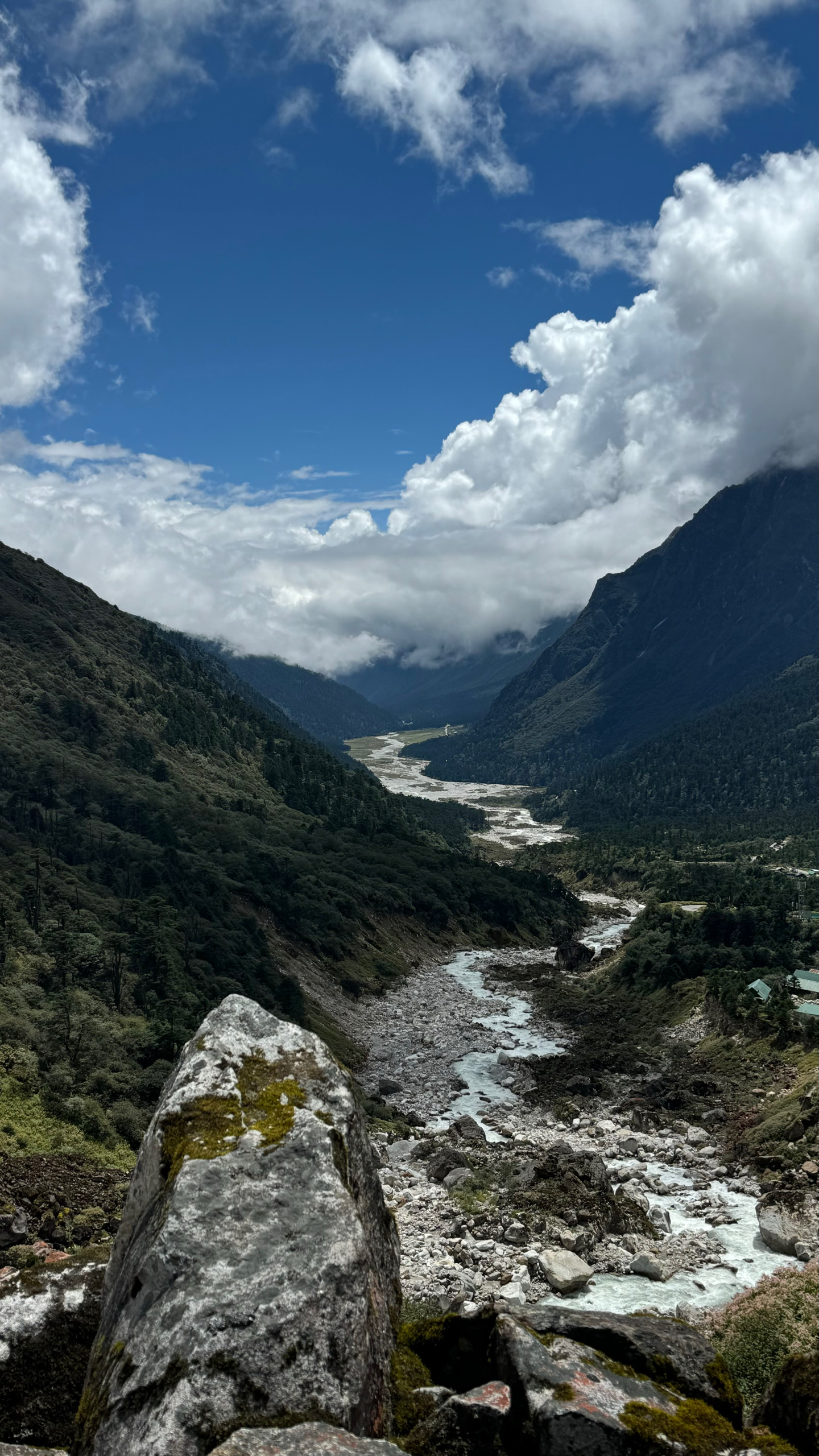
For flowers without a long trek, the Shingba Rhododendron Sanctuary in the Yumthang Valley (about 3,500 m / 11,800 ft) is the classic spot, with dozens of species flowering below snow peaks. Barsey Rhododendron Sanctuary in West Sikkim is the other great bloom trail. It is a fine time for Gangtok, Pelling and West Sikkim, and by April most North Sikkim roads have opened up after winter, though the highest stretches can still hold snow early in the season.
Summer (late April to June): green valleys before the rain
Sikkim summers are gentle. Temperatures rarely climb above 28 degrees C even in the warmest pockets, so for families escaping the plains heat this is a comfortable, pleasant stretch. Valleys are lush, waterfalls are full, and the light is soft in the mornings.
This overlaps with school-holiday travel, so Gangtok, Tsomgo Lake and Pelling see steady crowds through May and early June. The trade-off is that clouds build through the afternoons and the big peaks play hide-and-seek. By late May thunderstorms become frequent, the first signal that the monsoon is on its way.
Monsoon (mid-June to September): landslide season, plan with buffer
We will be honest here, because it matters for safety. Rain is heavy through July and August, and Sikkim's steep, winding roads are prone to landslides in this period, most of all in North Sikkim on the routes toward Lachen, Lachung and Yumthang. Main tourist roads are monitored and cleared by the authorities, but delays and temporary closures do happen, and North Sikkim permits can be held back during severe weather.
It is not all bad. The state is at its greenest, crowds thin out, and lower-altitude areas like Gangtok, Namchi and Ravangla are still very doable. If you travel in monsoon, keep spare buffer days in your plan, travel by private vehicle rather than tight shared schedules, and stay flexible on North Sikkim.
Autumn (October to November): the clearest mountain skies
If your priority is mountain views and photography, autumn is the season. Once the monsoon clears, the air is washed clean, skies turn deep blue, and Kanchenjunga (8,586 m / 28,169 ft) shows itself far more reliably than at any other time. Daytime temperatures are a comfortable 15 to 25 degrees C.
This is prime time for sightseeing, high-altitude runs to Tsomgo Lake and Nathula, North Sikkim, and treks such as Dzongri and Goechala. It is also the busiest and most in-demand window, so rooms, permits and vehicles fill early around the festival period. If autumn is your plan, book well ahead.
Winter (December to February): snow and stillness
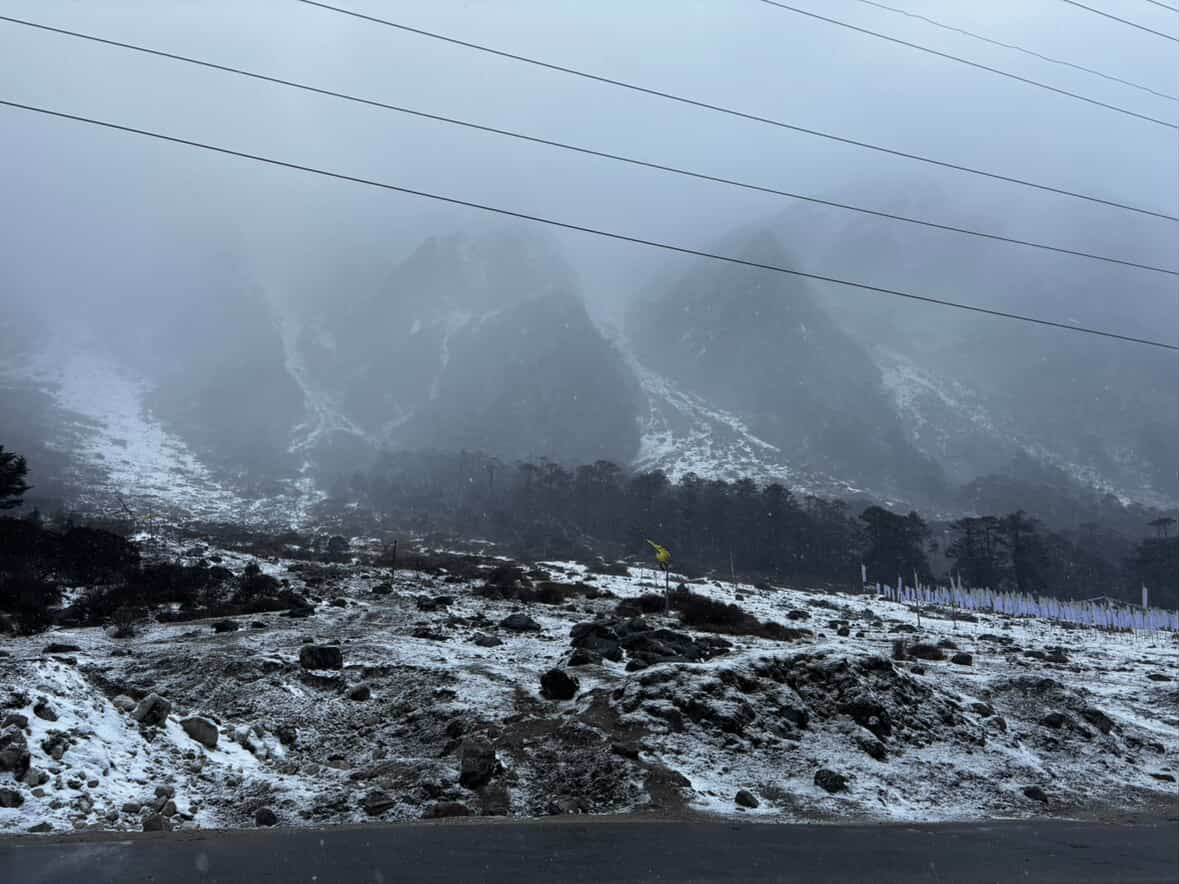
Snow usually arrives from late December, with January the heaviest month. Tsomgo Lake (about 3,753 m / 12,313 ft) and Nathula (about 4,310 m / 14,140 ft) get proper snow, and North Sikkim, including Yumthang, Zero Point and the road toward Gurudongmar Lake (5,430 m / 17,800 ft), turns white. Gangtok itself stays milder, around 8 degrees C by day.
Winter is quiet, crisp and often beautifully clear, but it comes with caveats. Heavy snowfall can shut Nathula for days at a stretch, and the high North Sikkim roads and passes close temporarily until they are cleared. Come with warm layers, keep your itinerary flexible, and treat any high-altitude day as weather-dependent.
Sikkim month by month, at a glance
- March: winter easing, early rhododendrons, snow still likely up high. Good shoulder value.
- April: peak bloom, mild days, strong all-rounder for first-time visitors.
- May: green and pleasant, busier, afternoon clouds building.
- June: monsoon sets in; lower areas fine, North Sikkim gets riskier.
- July to August: wettest months, highest landslide risk, thinnest crowds.
- September: rain easing late in the month, greenery at its best.
- October to November: clearest skies, best peak views, peak season, book early.
- December to February: snow season, quiet and scenic, high roads and Nathula can close.
Permits and open days: what changes by nationality
Sikkim's border areas need permits, and the rules differ by nationality. Indian nationals need a Protected Area Permit (PAP) for Tsomgo Lake, Nathula, Zuluk and all of North Sikkim (Lachen, Lachung, Yumthang, Gurudongmar). For North Sikkim, carry a Voter ID, passport or driving licence with passport-size photos, as Aadhaar is not accepted as primary ID there.
Foreign nationals (and OCI holders) need a Restricted Area Permit to enter Sikkim, plus a PAP for protected areas. Foreigners can visit Tsomgo Lake and Yumthang Valley, but are not permitted at Nathula Pass, Gurudongmar Lake, Zero Point or Zuluk, as these are sensitive border zones.
One timing detail catches many people out: Nathula Pass is open Wednesday to Sunday and closed on Monday and Tuesday, and even on open days it depends on weather and army clearance. Tsomgo Lake sits about 40 km from Gangtok, roughly a 1.5 to 2 hour drive, and is open all week. We arrange all permits as part of the trip, so you do not have to chase paperwork on the ground.
So, when should you go?
If you want blooms and gentle weather, aim for April into May. If you want the sharpest mountain views and are happy to book early, choose October to November. Craving snow at Tsomgo and Nathula? Come in January and stay flexible. Travelling in monsoon on a budget? It can absolutely work with buffer days and a sensible route.
The honest truth is there is no single best month, only the best month for the trip you actually want, whether that is a relaxed Gangtok and Pelling loop or a full Gangtok, Lachen and Lachung run through North Sikkim. Tell us your rough dates and what you most want to see, and we will tell you plainly what is realistic for that window, including anything likely to be closed. Send us your dates on WhatsApp whenever you are ready, and we will help you plan it around the season.
Frequently asked questions
What is the overall best time to visit Sikkim?
Mid-March to May and October to November. Spring gives rhododendron blooms and mild weather; autumn gives the clearest views of Kanchenjunga and the most stable skies for sightseeing and trekking.
When do the rhododendrons bloom in Sikkim?
From late March to early May, with April as the peak. The Shingba Rhododendron Sanctuary in Yumthang Valley and Barsey Rhododendron Sanctuary in West Sikkim are the best places to see them.
Is it safe to visit Sikkim during the monsoon?
Lower areas like Gangtok, Namchi and Ravangla are usually fine, but July and August bring heavy rain and landslide risk, especially in North Sikkim. Travel with buffer days, a private vehicle and a flexible plan.
Which days is Nathula Pass open?
Wednesday to Sunday. It is closed on Monday and Tuesday, and even on open days access depends on weather and army clearance, so heavy snow can shut it.
Can foreign tourists visit Nathula Pass and Gurudongmar Lake?
No. These are restricted border areas open to Indian nationals only. Foreigners can still visit Tsomgo Lake and Yumthang Valley with the required permits.
When can I see snow in Sikkim?
From late December to February, with January usually the heaviest. Tsomgo Lake, Nathula and North Sikkim get the most snow, though high roads and passes can close temporarily after heavy snowfall.
Planning this trip?
Wongyal Travels is a Gangtok-based team with 11+ years arranging Sikkim and Darjeeling trips. Send your dates and group size for a practical plan and quote.